Mobile Dog Grooming for Nervous and Anxious Dogs
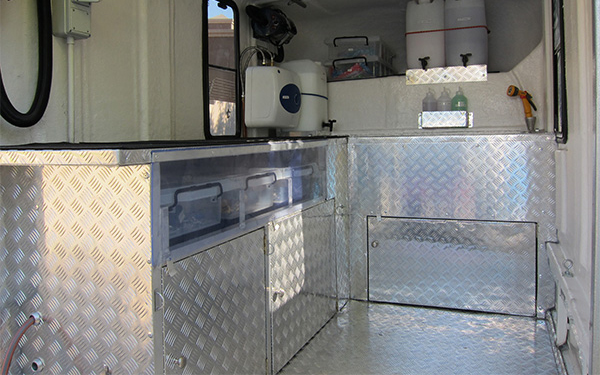
Mobile dog grooming for nervous and anxious dogs can remove several triggers associated with a visit to a busy grooming salon. There is no unfamiliar car journey, crowded reception area or long wait near barking dogs. The groomer comes to the dog’s home environment, making the appointment more predictable and easier for many sensitive pets to manage.
That does not mean every worried dog will immediately enjoy being bathed, dried or clipped. Grooming anxiety can be linked to noise sensitivity, discomfort, limited early handling, a previous frightening experience or a medical problem. A calmer setting helps, but the groomer’s handling, the condition of the coat and the owner’s preparation are just as relevant.
The best results often come from treating grooming as a gradual process instead of a single appointment that must be completed at all costs. For some dogs, success means finishing a full groom without distress. For others, the first sensible goal may be a bath, a few nails or a short introduction to the equipment.
Owners in the specified Gauteng service areas can use mobile grooming to reduce unnecessary travel and disruption. This can be particularly useful for dogs unsettled by traffic, summer thunderstorms or abrupt changes in routine.
Why dogs become anxious about grooming
Dogs do not automatically understand that clippers, dryers and nail tools are harmless. From their perspective, grooming involves close restraint, unfamiliar sounds, unusual surfaces and people touching sensitive areas such as the paws, face, ears and tail.
A dog can also be nervous without having had a bad grooming experience. Puppies that received little gentle handling may find the process unfamiliar. Older dogs can become less tolerant because of arthritis, reduced hearing, poor eyesight or tender skin. Dogs with long, tangled coats may associate brushing with pulling and pain.
Common grooming triggers include:
- The drive to a salon, especially for dogs that become carsick or associate the car with veterinary visits.
- Barking, dryers and other sudden noises.
- Slippery baths or grooming surfaces.
- Having feet, ears or the muzzle handled.
- The vibration and sound of clippers.
- Warm air from a dryer moving across the face or body.
- Separation from the owner.
- Discomfort caused by knots, compacted undercoat, inflamed skin or overgrown nails.
- Long waits before or after the groom.
Anxiety can also develop when owners postpone grooming until the coat is severely matted. Removing tight mats is more uncomfortable and time-consuming than maintaining a coat before tangles reach the skin.
Signs that a dog is stressed during grooming
Growling and snapping are obvious warnings, but many dogs show quieter signs first. Recognising those early signals gives the groomer an opportunity to pause or change the way a task is approached.
Watch for repeated lip licking, yawning when the dog is not tired, turning the head away, showing the whites of the eyes, trembling, panting in cool conditions, drooling, trying to hide or repeatedly lifting a paw. A dog that suddenly becomes rigid and still is not necessarily calm. Freezing can be a serious sign that the animal feels trapped.
Other dogs respond with frantic movement. They may pull away, scratch at the door, spin, vocalise or attempt to climb onto the handler. Loss of bladder or bowel control indicates substantial distress and deserves a careful response, not punishment.
Pain can resemble fear. A dog that objects when one hip, ear or paw is touched may need veterinary assessment. Grooming cannot diagnose the problem, and continuing to restrain the dog could make the discomfort and future anxiety worse.
How mobile dog grooming can help an anxious dog
The main benefit of a mobile appointment is a more controlled environment close to home. The dog avoids travelling to another premises and is not placed in a room containing several unfamiliar animals. Fewer competing sights, smells and sounds can reduce the dog’s overall level of arousal before grooming begins.
Mobile appointments can also make communication more direct. An owner can explain the dog’s triggers, health concerns and previous grooming reactions before the session starts. The groomer can then consider the order of tasks and identify which parts of the groom may require extra time or a modified approach.
Potential advantages include:
- No stressful trip through Gauteng traffic.
- Less exposure to unfamiliar dogs and salon activity.
- A shorter transition from the home to the grooming environment.
- Greater consistency when appointments are arranged regularly.
- Clearer discussion of coat condition, sensitive areas and behaviour.
Mobile grooming is not a cure for severe fear, however. The equipment still makes noise, and bathing, brushing, nail care and clipping still involve physical handling. A dog that panics, bites without warning or cannot safely tolerate necessary care may need a plan developed with a veterinarian or suitably qualified canine behaviour professional.
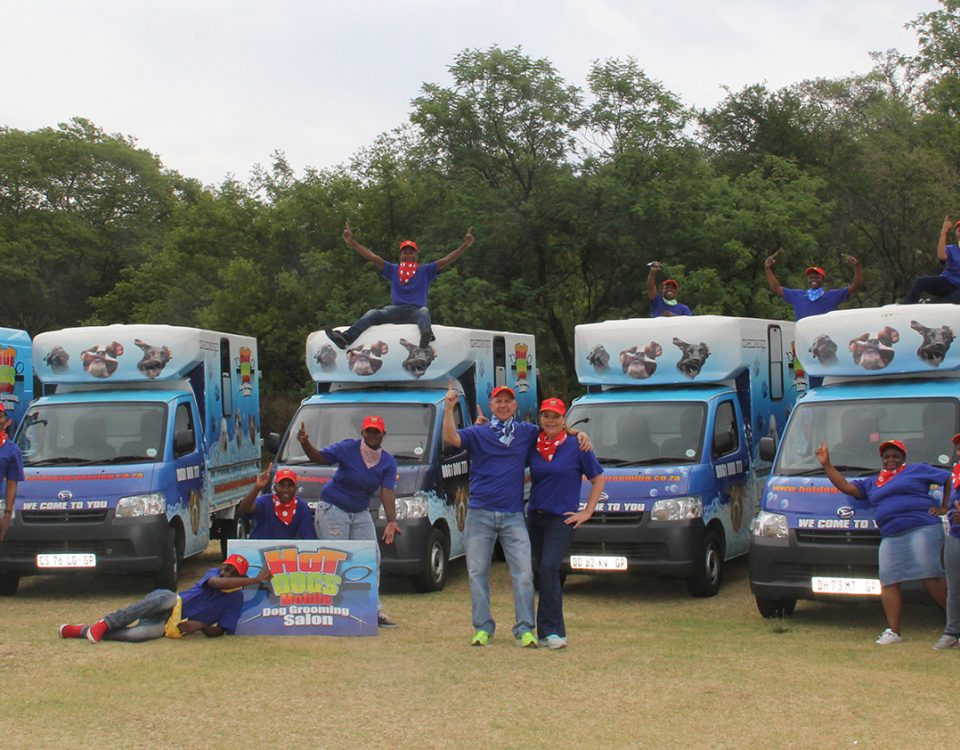
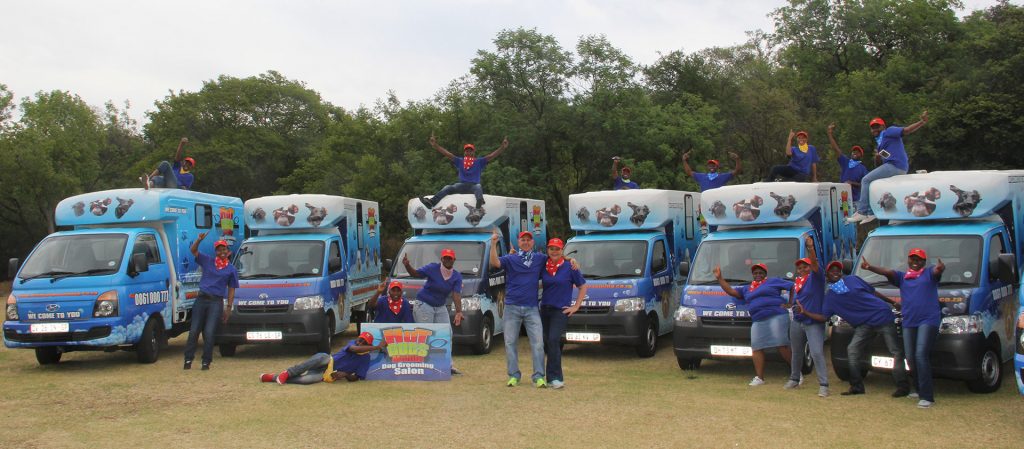
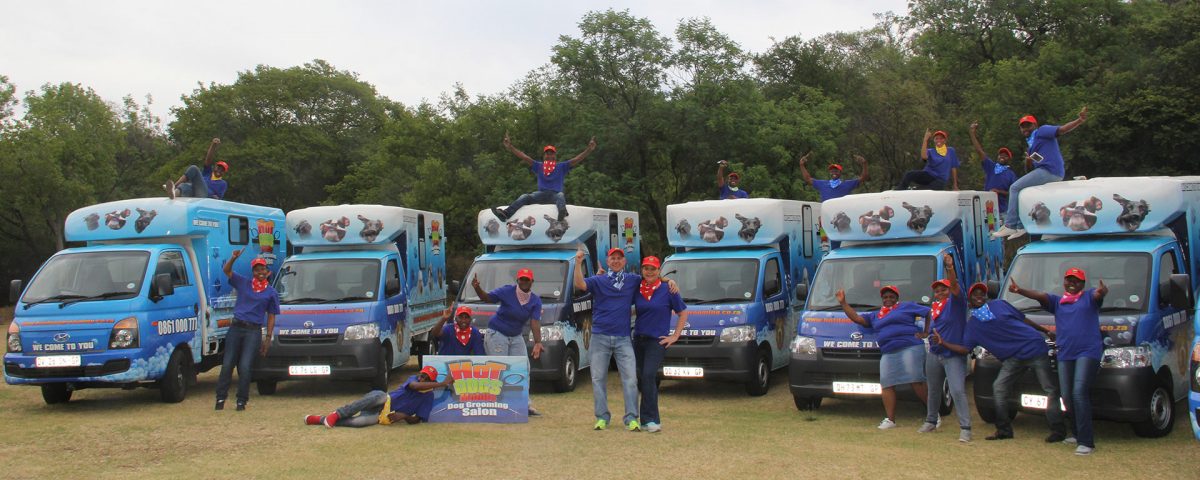
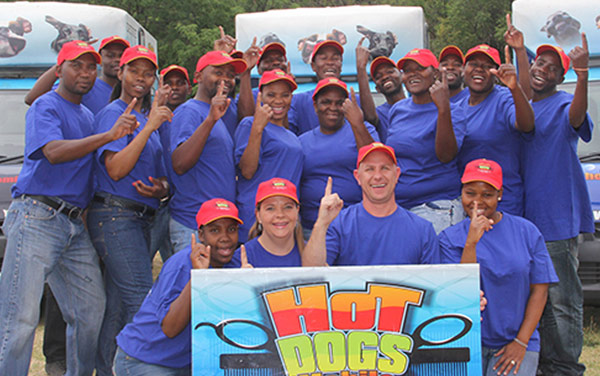
HotDogs Mobile Grooming provides services in specified areas of Gauteng. Owners can review the available mobile grooming services before enquiring so that the dog’s coat and grooming needs can be discussed accurately.
What to tell the groomer before the appointment
Do not wait until the groomer arrives to mention a bite history, noise phobia or painful joint. Honest information protects the dog and the person handling it. It also makes it easier to decide whether a standard appointment is appropriate.
Share the dog’s age, breed or coat type, general health and usual grooming routine. Explain which body areas cause a reaction and what that reaction looks like. A dog that pulls its paw away needs a different plan from one that has bitten during nail clipping.
Useful details include:
- Previous attempts to bite, snap or escape during handling.
- Sensitivity to dryers, clippers, water or nail tools.
- Arthritis, skin conditions, ear problems, recent surgery or other known medical issues.
- The current degree of matting or undercoat compaction.
- Any advice already provided by the dog’s veterinarian.
- Whether the dog accepts a muzzle and has been positively trained to wear one.
- What helps the dog recover, such as a brief pause or a familiar reward.
A muzzle is not a substitute for low-stress handling, and putting one on a dog that has never worn it can increase panic. If a muzzle is needed for safety, discuss this in advance. It must fit correctly, allow suitable breathing and never be used as punishment.
Preparing a nervous dog for mobile grooming
Keep the period before the appointment ordinary. A short sniffing walk can help a dog settle, but strenuous exercise in Gauteng’s midday heat is not a good preparation strategy. Give the dog time to toilet and provide access to drinking water.
Avoid a large meal immediately before grooming if the dog is prone to nausea or stress-related stomach upset. Do not change prescribed medication or give sedatives, calming products or human medicines without veterinary guidance.
Practise gentle handling between appointments
Short sessions at home can make routine care more familiar. Touch a paw briefly, reward calm behaviour and stop. On another occasion, lift an ear flap or brush one easy section of the coat. The aim is not to hold the dog still until it gives up. It is to build a positive association in manageable steps.
Keep practice sessions below the dog’s fear threshold. If the dog is already pulling away, panting or refusing food it would normally take, the exercise has progressed too quickly. Return to an easier step.
Make equipment less surprising
Some dogs benefit from hearing a grooming-like sound at a very low level while receiving a reward, provided they remain relaxed. Clippers or a household dryer must never be brought close suddenly in an attempt to make the dog “get used to it”. Gradual exposure is more useful than flooding the animal with a frightening stimulus.
Regular brushing also prevents grooming day from becoming a long detangling session. Use tools suited to the coat and brush in sections, checking down to the skin without scraping it. If a knot is tight against the body, avoid cutting it out with scissors. Dog skin can be pulled into a mat and cut accidentally.
A sensible grooming process for an anxious dog
A thoughtful appointment begins before the first tool is used. The groomer needs an accurate behaviour history and a realistic view of the coat. Priorities can then be set according to hygiene, comfort and safety.
- Initial assessment: The dog’s behaviour, mobility and visible coat condition are considered. Any painful or suspicious skin problem may need veterinary attention.
- Calm introduction: The dog is given a brief opportunity to orientate without being crowded or repeatedly approached.
- Essential tasks first: If tolerance is uncertain, urgent hygiene or coat needs may take priority over a perfect cosmetic finish.
- Adjusted handling: The position, tool or order of work can be changed if a particular step causes escalating stress.
- Breaks where useful: A short pause can help some dogs recover. For others, extending the appointment creates more fatigue, so the response must be individual.
- A safe stopping point: If the dog or groomer is at risk, ending an unfinished groom can be the responsible decision.
Owners sometimes ask for every knot to be brushed out because they want to preserve a long coat. On a frightened dog, prolonged dematting may be painful and can reinforce fear of brushing. Clipping a badly matted coat may be kinder, although clipping close to the skin also requires care and can reveal irritation hidden beneath the mats. Coat condition, skin health and behaviour all affect the available options.
Coat type affects the length and difficulty of the appointment
Anxiety is only one part of the grooming plan. A short-coated dog may mainly need bathing, drying, nail care and a skin-and-coat check. A long, curly or continuously growing coat generally needs more brushing and regular trimming. Double-coated dogs can require thorough removal of loose undercoat, particularly during seasonal shedding.
There is no single grooming interval that suits every nervous dog. Coat texture, length, lifestyle, shedding, skin health and home brushing all affect frequency. More regular appointments often keep sessions manageable because the coat has less time to knot or compact. Long gaps can turn routine maintenance into a demanding corrective groom.
Gauteng’s conditions also influence coat care. Summer rain can leave long coats damp and prone to tangling if they are not rinsed, dried and brushed properly. During the dry winter months, dust and loose coat can build up even when a dog does not appear dirty. Owners need to check friction areas such as behind the ears, under the collar, in the armpits, around the tail and between the legs.
When veterinary or behavioural support is needed
Speak to a veterinarian if grooming reactions begin suddenly, handling one area causes pain, the skin is inflamed, the ears smell or discharge is present. A change in tolerance can be associated with arthritis, dental pain, ear disease, injury or another medical concern.
Veterinary help is also appropriate when fear is so severe that normal grooming cannot be completed safely. A veterinarian can assess the dog’s health and discuss medically appropriate options. Owners must never give leftover medication or human sedatives. Even products described as natural can have side effects or interact with prescribed treatment.
A qualified behaviour professional may assist with a structured desensitisation and counterconditioning plan. This work takes time. The objective is to change the dog’s emotional response, not simply suppress warning signals such as growling.
Mistakes that often make grooming anxiety worse
Forcing contact is a common error. Holding a struggling dog more tightly can increase panic and make the next appointment harder. Punishing a growl is equally risky because growling communicates discomfort. If the warning is suppressed, the dog may move to a bite with less visible notice.
Other avoidable mistakes include postponing coat care until severe matting develops, using scissors close to the skin, trying several new calming products on appointment day and hiding previous aggressive behaviour from the groomer. Excessive reassurance can also add excitement if it is delivered in a worried voice. Calm, practical handling is usually more helpful.
Owners also need realistic expectations. A nervous dog may not tolerate an elaborate style during the first visit. A shorter, maintainable trim can reduce brushing demands and make future sessions easier, depending on the coat type. The dog’s welfare takes priority over a highly specific cosmetic result.
Questions to ask before booking a mobile groom
Explain that your dog is anxious and ask how the appointment will be approached. Find out what information is needed beforehand, which services are suitable for the coat and what happens if the groom cannot be completed safely. Ask how you should prepare the dog and whether your presence is likely to help or distract.
Pricing can vary with the dog’s size, coat, required services and coat condition, so an accurate description is more useful than asking only for a general figure. HotDogs Mobile Grooming provides a grooming quote and enquiry option where owners can supply relevant details.
Frequently asked questions
Is mobile grooming always better for an anxious dog?
Not always, but it can remove common triggers such as travelling, waiting near unfamiliar dogs and spending time in a busy salon. The dog’s individual triggers, health, coat condition and response to grooming equipment still need to be considered.
Can a nervous dog be groomed in one appointment?
Some nervous dogs can complete a full groom with calm handling and an appropriate environment. A severely fearful dog may need a shorter introductory session, staged grooming or veterinary and behavioural support. Safety and welfare are more valuable than forcing every task to completion.
Can I give my dog something to calm it before grooming?
Only give medication or calming products under veterinary guidance. Do not use human medicine, leftover prescriptions or another pet’s medication. Tell the groomer about anything the dog has been given before the appointment.
Arrange mobile dog grooming for your nervous dog
Good preparation, honest communication and regular coat maintenance can make grooming less stressful. Mobile dog grooming for nervous and anxious dogs removes several avoidable pressures while allowing care to take place close to home.
If your dog struggles with travel, salon noise or unfamiliar animals, contact HotDogs Mobile Grooming with details about the dog’s coat, health and previous grooming behaviour. Request a mobile grooming quote for your area in Gauteng and discuss the service your dog needs.